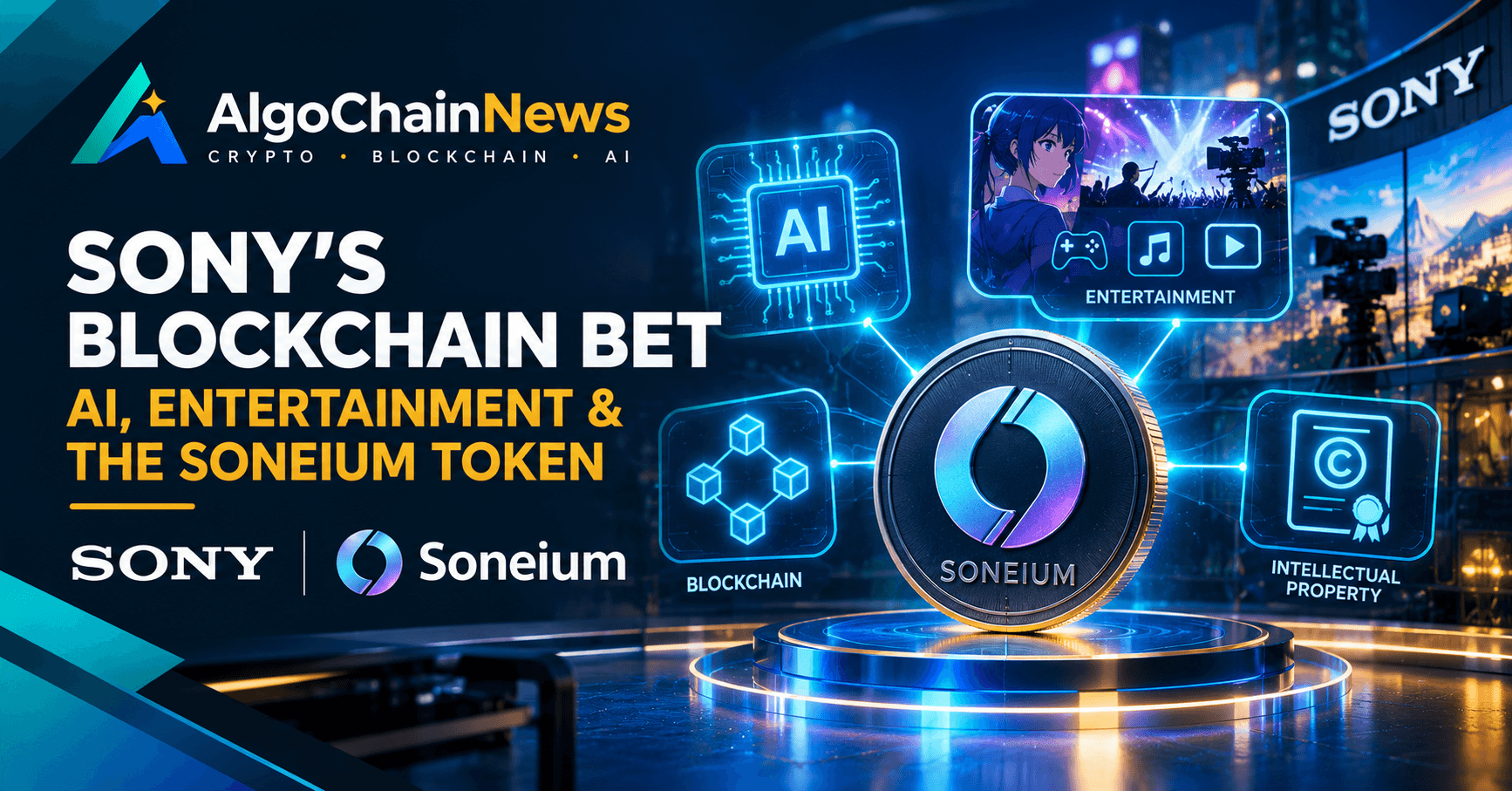
Sony-backed blockchain network Soneium is expanding its ambitions beyond blockchain infrastructure, announcing plans for a native ecosystem token and new tools designed to connect entertainment intellectual property, artificial intelligence, and digital investment. The announcement, published on October 26, introduces a broader vision in which creators, intellectual property owners, developers, fans, and investors can participate in the economic activity surrounding digital entertainment.

The initiative arrives as AI-generated content creates new questions about copyright, licensing, ownership, and compensation. Soneium believes blockchain technology could help make intellectual property rights easier to identify and licensing agreements easier for applications and AI agents to process.
What Is Soneium?
Soneium is an Ethereum Layer 2 blockchain developed through the collaboration between Sony Group and Startale Group. It is designed to support applications involving entertainment, digital collectibles, games, music, anime, and other forms of intellectual property.
According to its latest announcement, the ecosystem already includes more than 250 applications. Its next phase focuses on building an on-chain entertainment economy in which digital infrastructure can support the funding, licensing, distribution, and commercialization of creative works.
Rather than treating blockchain simply as a way to transfer digital assets, Soneium is positioning its network as infrastructure for managing the economic relationships surrounding entertainment content.
Soneium Plans Its Own Cryptocurrency Token
One of the announcement's most significant developments is Soneium's plan to introduce a native ecosystem token called SONEIUM.
The proposed token is intended to connect different participants across the Soneium ecosystem, including creators producing intellectual property, businesses commercializing creative works, developers building applications, and communities supporting their favorite projects.
However, important details remain unavailable. Soneium has not yet announced a token generation event date or disclosed complete information about the token's supply, distribution, or launch arrangements.
Consequently, the announcement should not be interpreted as confirmation that SONEIUM is already available to trade. Investors should rely on official communications before making decisions involving a potential token launch.
What Is Tokenized Intellectual Property?
Another central element of Soneium's strategy is tokenized intellectual property, often shortened to tokenized IP.
The concept involves representing creative works and aspects of their associated economic activity on a blockchain. Depending on the project's legal and technical structure, this approach could support new ways to fund entertainment projects, coordinate communities, manage licensing arrangements, or distribute revenue.
For example, an entertainment company developing a character franchise might use a tokenized IP model to support merchandise production, animated content, or new licensing opportunities. Supporters could participate in a project under clearly defined terms, while smart contracts could help implement agreed-upon payment rules.
Tokenization does not automatically transfer copyright ownership or guarantee financial returns. The rights attached to any token depend on the specific offering, contractual terms, applicable laws, and the permissions granted by the intellectual property owner.
Moriusa and K-Pop Projects Show How the Model Could Work
Soneium identified Moriusa, a character intellectual property owned by Japanese entertainment company Super State Holdings, as the first project under its new tokenized IP direction.
The initiative is intended to explore opportunities to expand the property through activities such as merchandise, animated shorts, and licensing.
Soneium has also highlighted its collaboration with South Korean entertainment company DayOneDream, which works with K-pop intellectual property through its WAVIST platform. The partnership aims to bring aspects of entertainment-related business and concert revenue arrangements onto blockchain infrastructure.
These projects illustrate how tokenization could extend beyond cryptocurrency trading. Instead of focusing exclusively on the market price of a digital asset, the model seeks to connect blockchain participation with identifiable creative properties and commercial activities.
Nevertheless, the precise rights, eligibility requirements, risks, and financial terms of individual offerings must be assessed separately. Tokenized entertainment products should not automatically be treated as equivalent to shares, conventional bonds, or direct ownership of copyrighted works.
Why AI Licensing Could Become a Major Blockchain Use Case
Artificial intelligence is changing how digital content is created and reused. AI systems can generate or modify images, music, video, and written material, but determining whether a particular use is authorized can be difficult when licensing terms are scattered across contracts and online platforms.
Soneium is developing its intellectual property infrastructure to make rights information more accessible to software applications and AI agents.
The network has announced support for ERC-8432, a proposed Ethereum standard for on-chain intellectual property assets and licensing registries. The standard is intended to provide a common interface through which systems can identify registered works, inspect machine-readable licensing terms, and verify recorded agreements.
In a potential future application, an AI agent searching for a licensed image or music track could query a compatible registry to discover the relevant usage conditions. If the necessary permissions and payment mechanisms are available, software could help automate parts of the licensing process.
This could make it easier for rights holders to communicate permitted uses and for developers to build applications that respect licensing requirements.
However, machine-readable licensing is not a complete solution to copyright disputes. Blockchain records cannot independently establish that every registration is accurate, that the person submitting a work owns its rights, or that a particular use complies with all applicable laws.
How Smart Contracts Could Support Royalties
Smart contracts are programs deployed on a blockchain that execute predefined rules when specified conditions are met.
In an entertainment ecosystem, they could be used to record licensing agreements, calculate payments, and distribute revenue according to agreed-upon terms.
For example, if a creative work is licensed for a commercial project, a smart contract could help distribute a payment among eligible rights holders according to a predefined arrangement.
Soneium's proposed intellectual property architecture includes components intended to register works, connect related creations, and support licensing and revenue mechanisms.
For creators, these tools could potentially reduce administrative friction and open additional funding channels. For businesses, standardized licensing information could make it easier to identify usage permissions and integrate rights management into digital workflows.
Actual results would depend on adoption, reliable rights information, legal enforceability, payment infrastructure, and the willingness of entertainment companies and developers to use the system.
What Could This Mean for the Crypto Industry?
Soneium's announcement reflects a broader effort to connect blockchain technology with established industries rather than relying solely on cryptocurrency speculation.
Entertainment intellectual property offers several possible applications, including digital collectibles, fan communities, licensing management, project funding, and automated revenue distribution.
AI adds another dimension because automated systems may need to identify content, check permissions, and process payments at a scale that is difficult to manage through traditional manual workflows alone.
If standardized licensing infrastructure gains adoption, blockchain networks could become part of the technical systems supporting digital content businesses. However, this remains a developing use case, not a guaranteed outcome.
Competition will also matter. Existing content platforms, copyright databases, payment providers, and other blockchain networks are pursuing overlapping solutions. Soneium will need to demonstrate that its tools offer practical advantages for creators and commercial partners.
The Risks and Questions That Remain
Despite the potential, several challenges could affect the success of Soneium's strategy.
- Adoption: Creators, entertainment companies, developers, and users must be willing to use the system for it to generate meaningful activity.
- Copyright accuracy: Blockchain records do not automatically prove ownership or resolve disputes over intellectual property.
- Regulation: Tokenized investment products and revenue-sharing arrangements may be subject to different legal requirements depending on their structure and jurisdiction.
- Token uncertainty: SONEIUM's launch timing, tokenomics, distribution, and practical utility remain to be fully disclosed.
- Commercial sustainability: Long-term success will depend on real demand for the products and services built on the network, not simply the announcement of new tokens.
These questions are particularly important for anyone evaluating the project from an investment perspective. A promising technological concept does not automatically translate into token value or a sustainable business model.
Conclusion: Soneium Wants to Connect AI, Creators, and Blockchain
Soneium's latest announcement outlines a strategy that combines a planned ecosystem token, tokenized intellectual property, and infrastructure for machine-readable licensing.
The approach targets a growing challenge in the digital economy: how to fund creative work, manage permissions, and distribute value as content increasingly moves between human creators, online communities, commercial platforms, and AI systems.
The planned SONEIUM token could help connect participants across the ecosystem, while tokenized IP and licensing tools aim to support new commercial models for entertainment content.
For now, the project's next steps matter more than speculation about a potential token price. Launch details, real-world partnerships, user adoption, legal clarity, and functioning licensing products will provide better evidence of whether Soneium can turn its vision into a sustainable blockchain ecosystem.
Disclaimer: This article is for informational and educational purposes only. It does not constitute financial, investment, or legal advice. Cryptocurrency tokens and tokenized assets may involve substantial risk. Readers should verify information through official sources and conduct their own research before making financial decisions.
Sources
- Soneium Official Blog — Official announcement on the on-chain entertainment economy, token plans, and tokenized intellectual property.
- Soneium Official Website — Project information and ecosystem updates.
- Chainwire — Announcement details on tokenized IP and the proposed SONEIUM token.
Get Breaking AI & Crypto Briefings First on Telegram
Join our real-time intelligence channels for daily AI breakthroughs, on-chain data signals, and market analysis.
Related Articles
 Blockchain
China Targets 2030 for National Blockchain Network: What It Means for the Industry
China has set a 2030 target for developing its national blockchain network as part of a broader digital infrastructure strategy. T...
 Blockchain
Enterprise Adoption and Compliance: Interoperability in Decentralized Identity Wallets
Explore how interoperability in decentralized identity wallets is shaping enterprise adoption and compliance in 2026.
 Blockchain
How Interoperability in Decentralized Identity Wallets Shapes 2026 Compliance
Explore how interoperability in decentralized identity wallets is crucial for compliance, enterprise adoption, and privacy in 2026...